
An online dictionary is a digital reference tool that helps users find the meanings, pronunciations, spellings, synonyms, antonyms, translations, and other information related to words. Unlike traditional printed dictionaries, online dictionaries can be accessed quickly through computers, smartphones, and tablets. They have become an important resource for students, teachers, writers, researchers, professionals, and anyone who wants to improve their vocabulary.
With the growth of the internet, dictionaries have moved beyond simple word definitions. Many modern platforms provide audio pronunciation, example sentences, grammar information, word origins, translation features, vocabulary exercises, and related words. This makes an online dictionary a useful learning tool rather than simply a collection of definitions.
What Is an Online Dictionary?
An online dictionary is a website or digital application that provides information about words and phrases through the internet. Users can enter a word into a search box and receive relevant information within seconds.
For example, if someone does not know the meaning of the word “appreciate,” they can search for it and find its definition, pronunciation, word type, synonyms, antonyms, and examples of how it is used in a sentence.
Online dictionaries can focus on one language or support multiple languages. Some are designed specifically for English learners, while others provide specialized terminology for subjects such as medicine, science, technology, law, business, and education.
Why Is an Online Dictionary Important?
An online dictionary makes language information easier to access. A printed dictionary may be large and difficult to carry, whereas a digital dictionary can be available on a smartphone or computer.
For students, it can support vocabulary development and improve reading and writing skills. Writers can use it to find more accurate words, while language learners can use pronunciation and example sentences to understand how unfamiliar vocabulary works.
The quick search process is another major advantage. Instead of turning through hundreds of pages, users can type a word and receive information almost instantly.
Main Features of an Online Dictionary
Different platforms offer different features, but many modern dictionaries provide several useful functions.
Word Definitions
The most basic function is providing definitions. A good definition explains what a word means in clear language.
Some dictionaries provide multiple definitions when a word has different meanings. This is particularly useful because many English words can be used in more than one context.
Pronunciation
Many online dictionaries include audio pronunciation. Users can listen to how a word is pronounced instead of relying only on phonetic symbols.
Some platforms provide different pronunciation options for varieties of English, such as British and American pronunciation.
Example Sentences
Example sentences demonstrate how a word is used in real communication. This can help learners understand grammar, context, and appropriate usage.
For example, knowing that “bright” can describe light is useful, but examples can also show that it may describe an intelligent person or a vivid color.
Synonyms and Antonyms
Synonyms are words with similar meanings, while antonyms have opposite meanings. Online dictionaries often provide both.
This feature can be especially helpful for students and writers who want to avoid unnecessary repetition and develop a richer vocabulary.
Parts of Speech
Online dictionaries commonly identify whether a word is a noun, verb, adjective, adverb, preposition, or another part of speech.
Understanding the grammatical role of a word helps users place it correctly in a sentence.
Word Origin and Etymology
Some advanced dictionaries explain the origin and historical development of words. This information is known as etymology.
Learning where words come from can make vocabulary more interesting and can sometimes help users remember meanings.
Translation
Multilingual online dictionaries can translate words and phrases between different languages. These tools are particularly useful for language learners and people communicating internationally.
However, users should remember that direct translations do not always capture the exact meaning of a word in every context.
Benefits of Using an Online Dictionary
Easy Accessibility
One of the biggest benefits is accessibility. Users can search for words from almost anywhere with an internet-connected device.
Students do not need to carry a heavy reference book when they have access to a reliable digital dictionary.
Saves Time
Searching online is generally faster than looking through a printed dictionary. A word can be entered into the search box, and the relevant information appears immediately.
This is especially useful when reading difficult articles, studying, or writing under time pressure.
Improves Vocabulary
Regular dictionary use can help people discover new words and understand their meanings. Learning synonyms, antonyms, examples, and related words can gradually expand vocabulary.
Supports Language Learning
Language learners can use digital dictionaries to check pronunciation, grammar, spelling, definitions, and examples.
When combined with regular reading and writing practice, an online dictionary can become an effective vocabulary-learning resource.
Helps Improve Writing
Writers often need to choose precise words. A dictionary can help them check meanings and find alternatives.
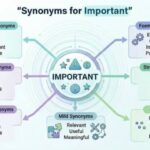
For example, instead of repeatedly using the word “important,” a writer may discover alternatives such as “significant,” “essential,” or “valuable,” depending on the context.
Provides Updated Information
Digital reference resources can be updated more easily than printed dictionaries. New words and meanings can be added as language changes.
This is particularly important in modern English, where technology, social media, business, and popular culture continually introduce new expressions.
Online Dictionary for Students
Students are among the most frequent users of digital dictionaries. They can use them while reading textbooks, preparing assignments, learning new vocabulary, or practicing English.
A student who encounters an unfamiliar word can check its meaning and then examine example sentences. Listening to pronunciation can also help improve speaking skills.
Teachers can encourage students to use dictionaries as learning tools rather than simply copying definitions. Students should try to understand a word, observe how it is used, and then create their own sentence.
Online Dictionary for English Learners
For people learning English as a second or foreign language, an online dictionary can provide several important advantages.
Learners can check whether a word is commonly used as a noun or verb, discover pronunciation patterns, and compare similar words. Example sentences can also explain differences that may not be obvious from a basic translation.
For instance, two words may have similar dictionary definitions but may be used in different situations. Context therefore plays an important role in vocabulary learning.
Online Dictionary and Pronunciation Practice
Pronunciation is an important part of effective communication. A person may know the meaning and spelling of a word but still pronounce it incorrectly.
Digital dictionaries with audio features allow users to listen repeatedly. Learners can compare the pronunciation they hear with their own pronunciation and practice difficult sounds.
Phonetic transcriptions can also be useful for advanced learners who want to understand the exact sound structure of a word.
Online Dictionary vs. Printed Dictionary
Both digital and printed dictionaries have advantages.
| Feature | Online Dictionary | Printed Dictionary |
|---|---|---|
| Search speed | Very fast | Slower |
| Portability | Usually highly convenient | Often large and heavy |
| Audio pronunciation | Often available | Usually unavailable |
| Updates | Can be frequent | Require new editions |
| Internet requirement | Often required | Not required |
| Examples | Often extensive | Depends on edition |
| Search method | Digital search | Alphabetical browsing |
An online dictionary is generally more convenient for quick searches, while a printed dictionary can still be useful when internet access is unavailable.
How to Use an Online Dictionary Effectively
Simply searching for a definition is not always enough. Users can get more value from a dictionary by exploring the information provided.
First, search for the unfamiliar word and read the definition carefully. Next, check its part of speech and pronunciation. Then examine example sentences to understand the word in context.
Users should also look at synonyms and related words. Finally, creating an original sentence with the new word can help reinforce learning.
Choosing a Reliable Online Dictionary
Not every website that provides definitions is equally reliable. Users should consider the quality and reputation of the source.
A reliable dictionary should provide clear definitions, accurate pronunciation information, useful examples, and appropriate grammatical details. Educational and established dictionary publishers are generally preferable to unknown websites that simply copy information from other sources.
Users should also be cautious when using automatic translation tools. Machine-generated translations can sometimes miss cultural or contextual meanings.
Common Mistakes When Using an Online Dictionary
One common mistake is choosing the first definition without considering context. Many words have multiple meanings, so users should select the definition that fits the sentence.
Another mistake is relying completely on translation. Translation can help explain a word, but understanding its English usage is also important.
Some learners also try to memorize long lists of definitions. A better approach is to learn vocabulary through examples, reading, conversation, and writing.
The Future of Online Dictionaries
Online dictionaries are likely to continue developing as digital technology advances. Artificial intelligence and language-processing technologies can make dictionary services more interactive.
Future tools may provide increasingly personalized vocabulary recommendations, pronunciation feedback, contextual explanations, and learning exercises. Integration with browsers, mobile applications, writing software, and educational platforms can also make dictionary features easier to access.
Despite these technological developments, the basic purpose remains the same: helping people understand and use language accurately.
Conclusion
An online dictionary is a convenient and powerful resource for understanding words and improving language skills. It provides much more than basic definitions, with features such as pronunciation, examples, synonyms, antonyms, grammar information, translations, and word origins.
For students, writers, teachers, and language learners, regular dictionary use can improve vocabulary, reading, writing, and communication. The key is to use the tool thoughtfully—checking meaning in context, listening to pronunciation, studying examples, and practicing new vocabulary.
As digital technology continues to evolve, online dictionaries will remain an important part of modern language learning and everyday communication.