
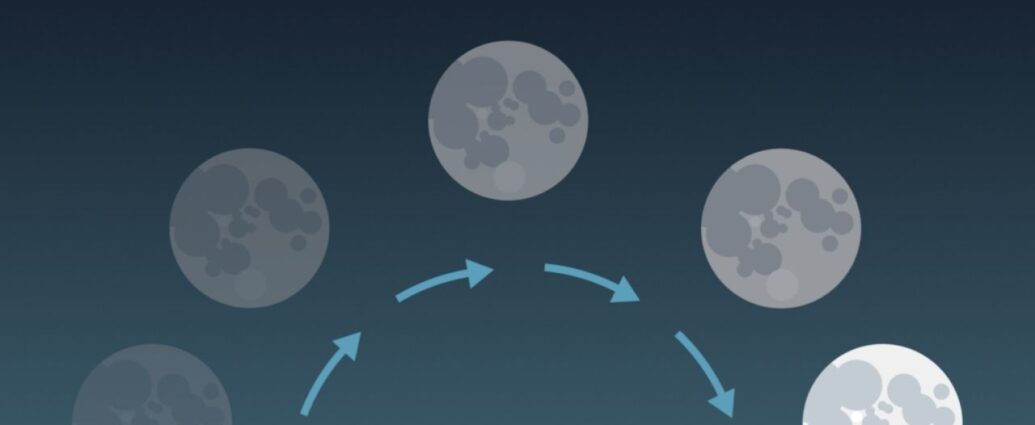
The moon in Jarrow offers a fascinating view of the night sky for anyone interested in astronomy, photography, or simply enjoying a clear evening outdoors. Located in Tyne and Wear, England, Jarrow provides opportunities throughout the year to observe different lunar phases, moonrise and moonset times, and special events such as lunar eclipses.
Whether you want to know when the moon will rise tonight, identify its current phase, or plan a night of moon photography, understanding the lunar calendar for Jarrow can make your experience much more enjoyable.
What Does “Moon Jarrow” Mean?
The phrase “moon Jarrow” generally relates to information about the Moon as observed from Jarrow, England. Because the Moon’s position changes continuously, its rise and set times, direction, altitude, and illuminated percentage vary from one day to the next.
Moonrise and moonset calculations are location-specific. This means that the time the Moon rises in Jarrow can be different from the time it rises elsewhere in the United Kingdom.
Moonrise and Moonset in Jarrow
Moonrise is the moment when the Moon appears above the local horizon, while moonset occurs when it disappears below it. These times change daily because of the Moon’s orbit around Earth.
For Jarrow, astronomy calendars provide daily information including:
- Moonrise time
- Moonset time
- Moon direction
- Moon altitude
- Percentage of illumination
- Distance between Earth and the Moon
- The Moon’s current phase
For accurate daily observations, it is useful to check a location-specific lunar calendar because even a small change in date can produce noticeably different moonrise and moonset times.
Moon Phases in Jarrow
The Moon goes through a repeating cycle of phases. The main phases are:
- New Moon – The Moon is positioned between Earth and the Sun, making it difficult to see from Earth.
- First Quarter – About half of the visible lunar disk is illuminated.
- Full Moon – The Earth-facing side of the Moon is almost completely illuminated.
- Third Quarter – Again, approximately half of the visible disk is illuminated, but the opposite side is lit compared with the First Quarter.
Between these primary phases are the crescent and gibbous phases. The complete lunar cycle takes approximately 29.5 days.
A lunar calendar for Jarrow can help observers determine exactly when each major phase occurs.
Why the Moon Looks Different Each Night
The Moon does not produce its own visible light. Instead, sunlight illuminates its surface. As the Moon travels around Earth, we see different portions of its sunlit side.
This creates the familiar sequence of:
New Moon → Waxing Crescent → First Quarter → Waxing Gibbous → Full Moon → Waning Gibbous → Third Quarter → Waning Crescent → New Moon
The changing appearance of the Moon is one of the easiest astronomical phenomena to observe without specialized equipment.
Lunar Eclipses in Jarrow
One of the most exciting lunar events is a lunar eclipse. During a lunar eclipse, Earth moves between the Sun and Moon, causing Earth’s shadow to fall across the Moon.
Jarrow can occasionally experience visible lunar eclipses. For example, a partial lunar eclipse occurred in Jarrow on August 28, 2026, with the local eclipse reaching its maximum at approximately 5:12 a.m. according to published astronomical calculations.
The visibility and appearance of an eclipse depend on the observer’s exact location, the Moon’s position above the horizon, and local conditions.
Best Time to Observe the Moon in Jarrow
The best viewing time depends on what you want to see.
For a full Moon, the Moon is generally easiest to observe around sunset and through the evening as it rises. A crescent Moon can be particularly attractive shortly after sunset or before sunrise, depending on whether it is waxing or waning.
For photography, many observers prefer times when the Moon is relatively low in the sky. This allows the lunar disk to be photographed alongside buildings, trees, bridges, or other foreground objects.
Clear skies are also important. Clouds, haze, and light pollution can significantly affect visibility.
Moon Photography in Jarrow
Jarrow’s urban surroundings can provide interesting opportunities for lunar photography. You do not necessarily need an expensive telescope to capture an attractive Moon photograph.
A basic camera or modern smartphone can be enough to photograph a bright full Moon. For better detail, a tripod and telephoto lens can help produce sharper images.
Some useful tips include:
- Use a tripod whenever possible.
- Keep the ISO relatively low.
- Focus manually on the Moon.
- Use a fast shutter speed because the Moon is surprisingly bright.
- Experiment with exposure rather than relying entirely on automatic settings.
- Include local landmarks or buildings for a more interesting composition.
Checking the moonrise direction beforehand can also help photographers choose a good location.
Why Check the Moon Calendar for Jarrow?
A Jarrow-specific moon calendar is useful because lunar conditions change every day. Instead of relying on general information about the Moon, observers can find details relevant to their exact location.
A good lunar calendar can answer questions such as:
- What time does the Moon rise in Jarrow?
- What time does the Moon set?
- What phase is the Moon tonight?
- How much of the Moon is illuminated?
- When is the next full Moon?
- When is the next new Moon?
- Is a lunar eclipse visible from Jarrow?
- Which direction should I look to find the Moon?
These details can be especially valuable for photographers, amateur astronomers, and people planning outdoor activities.
Final Thoughts
The Moon over Jarrow is an accessible and fascinating subject for anyone interested in the night sky. From changing lunar phases and daily moonrise times to spectacular events such as lunar eclipses, there is always something different to observe.
You don’t need advanced astronomical equipment to begin. By checking the Moon’s phase, rise and set times, and the local weather conditions, you can plan a much better viewing experience.
For anyone searching for “moon Jarrow,” the most useful information is therefore location-specific lunar data: when the Moon rises and sets, what phase it is in, how bright it will appear, and whether any special astronomical events are visible from Jarrow.