
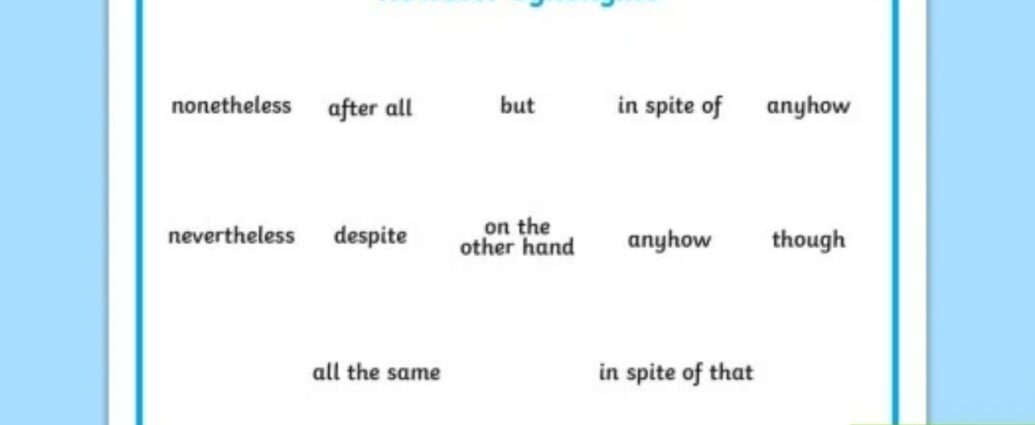
Finding the right however synonym can make your writing more natural, varied, and precise. The word “however” is commonly used to introduce a contrast, limitation, or surprising idea. Depending on the sentence, alternatives such as nevertheless, nonetheless, still, yet, though, but, on the other hand, and even so may work well.
However, these alternatives are not always interchangeable. Each word has its own tone, grammatical role, and level of emphasis. Understanding these differences can help students, writers, professionals, and English learners choose the best expression for a particular sentence.
What Does “However” Mean?
“However” is commonly used as an adverb to introduce an idea that contrasts with something previously stated. It can mean “nevertheless,” “in spite of that,” “on the other hand,” or “yet.”
For example:
The weather was cold. However, we went outside.
Here, “however” signals a contrast between the cold weather and the decision to go outside.
The word also has other meanings. In expressions such as “however difficult” or “however long,” it can mean “no matter how” or indicate an unlimited degree.
Best However Synonym Options
There are many alternatives to “however,” but the best choice depends on context.
1. Nevertheless
Nevertheless is one of the closest formal synonyms for however. It introduces a statement that remains true despite the previous point.
Example:
The project was difficult. Nevertheless, the team completed it on time.
This word is particularly useful in academic, professional, and formal writing.
2. Nonetheless
Nonetheless has almost the same meaning as “nevertheless” and is commonly used to express contrast or concession.
Example:
The instructions were complicated. Nonetheless, she managed to finish the task.
It is a strong choice when you want your writing to sound formal without being overly complicated.
3. Still
“Still” can introduce a contrasting point while emphasizing that something remains true despite the previous statement.
Example:
The journey was exhausting. Still, everyone enjoyed it.
“Still” generally sounds more conversational than “nevertheless” or “nonetheless.”
4. Yet
“Yet” can show contrast and often suggests that an unexpected or opposing result exists.
Example:
The task was challenging, yet he completed it successfully.
It is short and effective, particularly when connecting contrasting ideas.
5. But
“But” is one of the most common alternatives to “however.” It is generally less formal and is a conjunction used to connect contrasting ideas.
Example:
The restaurant was expensive, but the food was excellent.
Although “but” and “however” can have similar meanings, they do not always have the same grammatical structure. “However” is commonly used as an adverb, while “but” functions as a conjunction.
6. Though
“Though” can also introduce contrast, particularly in conversational or less formal writing.
Example:
I enjoyed the movie. It was a little long, though.
It can also appear at the beginning or middle of a sentence:
Though the road was difficult, we continued.
7. On the Other Hand
“On the other hand” is useful when presenting an alternative viewpoint or comparing two sides of an issue.
Example:
City life offers many opportunities. On the other hand, it can be stressful.
This phrase is especially useful in essays, comparisons, and argumentative writing.
8. Even So
“Even so” means that something remains true despite what has just been mentioned.
Example:
The instructions were confusing. Even so, we managed to complete the project.
It works well when the second statement is somewhat unexpected.
9. Notwithstanding
“Notwithstanding” is a formal word meaning despite or in spite of.
Example:
Notwithstanding the difficulties, the company continued its expansion.
It is more formal than everyday alternatives such as “but” or “still.”
10. All the Same
“All the same” can mean “nevertheless” or “despite that.”
Example:
The apartment is small. All the same, it is comfortable.
It is understandable in everyday English but is less common in formal academic writing.
However Synonym for Formal Writing
When writing an academic essay, report, or professional document, some alternatives are more appropriate than others.
Good formal options include:
- Nevertheless
- Nonetheless
- Notwithstanding
- On the other hand
- Even so
- Still
- Yet
For example:
The experiment produced unexpected results. Nevertheless, the findings provide useful information.
Another example:
The proposal has several limitations. Nonetheless, it offers a practical solution.
“Nevertheless” and “nonetheless” are particularly close in meaning to “however.”
However Synonym for Casual Writing
For everyday conversations, emails, messages, and informal writing, simpler alternatives are often better.
Useful choices include:
- But
- Still
- Yet
- Though
- Anyway
- Even so
For example:
I wanted to go, but I was too tired.
Or:
It was raining. Still, we decided to leave.
These expressions usually sound more natural in casual communication.
However Synonym for Academic Writing
Academic writing often requires clear transitions between contrasting arguments. “However,” “nevertheless,” and “nonetheless” can all work effectively.
Consider this example:
Online education is convenient. However, some students may find it difficult to remain motivated.
The sentence could also be written as:
Online education is convenient. Nevertheless, some students may find it difficult to remain motivated.
Or:
Online education is convenient. Nonetheless, some students may find it difficult to remain motivated.
The meaning remains broadly similar, although the style and emphasis can differ slightly.
Difference Between However and Nevertheless
“However” and “nevertheless” are very close in meaning, but “nevertheless” often emphasizes that the second statement remains true despite the first.
Compare:
The course was difficult. However, I enjoyed it.
The course was difficult. Nevertheless, I enjoyed it.
Both are correct. The second version gives slightly stronger emphasis to the fact that the difficulty did not prevent enjoyment.
Difference Between However and But
“But” is generally more direct and conversational, while “however” often works as a transitional adverb.
But:
I wanted to attend, but I was busy.
However:
I wanted to attend. However, I was busy.
The punctuation and sentence structure are important. A writer should not simply replace one with the other in every sentence because their grammatical functions differ.
Difference Between However and Nonetheless
“However” and “nonetheless” are often interchangeable when they introduce a contrasting idea.
However:
The plan is expensive. However, it could be effective.
Nonetheless:
The plan is expensive. Nonetheless, it could be effective.
“Nonetheless” can sound slightly more formal, making it useful in essays and professional writing.
However Synonym for “No Matter How”
Not every use of “however” means “nevertheless.” In constructions such as “however hard,” “however long,” or “however much,” the word can mean “no matter how” or “to whatever degree.”
For example:
However hard she tried, she could not solve the problem.
This means:
No matter how hard she tried, she could not solve the problem.
Other alternatives include:
- No matter how
- Regardless of how
- In whatever way
- To whatever extent
Therefore, replacing “however” with “nevertheless” in this type of sentence would change the meaning.
List of However Synonyms
Here is a useful list of common alternatives:
| However Synonym | Typical Use |
|---|---|
| Nevertheless | Formal contrast |
| Nonetheless | Formal contrast |
| Still | Contrast with emphasis |
| Yet | Concise contrast |
| But | Common and conversational |
| Though | Informal or conversational |
| Even so | Despite a previous point |
| On the other hand | Alternative viewpoint |
| Notwithstanding | Very formal |
| All the same | Despite that |
| Regardless | Independence from a condition |
| Anyway | Informal transition |
Major thesaurus sources similarly list “nevertheless,” “nonetheless,” “still,” “yet,” “though,” “but,” “notwithstanding,” and “on the other hand” among related alternatives.
Examples of However Synonyms in Sentences
Using different alternatives can make writing less repetitive.
However:
The test was difficult. However, most students passed.
Nevertheless:
The test was difficult. Nevertheless, most students passed.
Nonetheless:
The test was difficult. Nonetheless, most students passed.
Still:
The test was difficult. Still, most students passed.
Yet:
The test was difficult, yet most students passed.
But:
The test was difficult, but most students passed.
Even so:
The test was difficult. Even so, most students passed.
These sentences communicate a similar contrast, although their tone and grammatical structures differ.
How to Choose the Right However Synonym
Choosing the best alternative depends on three factors: meaning, tone, and sentence structure.
For formal writing, consider “nevertheless,” “nonetheless,” or “notwithstanding.”
For everyday writing, “but,” “still,” “yet,” and “though” are usually natural.
For comparisons, “on the other hand” can be particularly useful.
For strong contrast, “nevertheless,” “nonetheless,” or “even so” may work well.
For the meaning “no matter how,” use phrases such as “no matter how” rather than contrastive synonyms.
Common Mistakes When Using However Synonyms
One common mistake is assuming every synonym can replace “however” in every sentence. Words with similar meanings can have different grammatical roles.
Another mistake is using formal words unnecessarily. For example, “notwithstanding” may sound unnatural in a casual conversation where “but” would be clearer.
Writers should also pay attention to punctuation. When “however” is used as a transitional adverb between independent clauses, punctuation should reflect its role.
For example:
The plan looked promising. However, it was too expensive.
This is different from simply using “but” to join the clauses:
The plan looked promising, but it was too expensive.
Why Learning However Synonyms Matters
Learning alternatives to “however” can improve vocabulary and prevent repetitive writing. Instead of using the same transition in every paragraph, writers can select an expression that accurately matches the relationship between ideas.
For students, this can make essays more varied. For professionals, choosing an appropriate transition can make reports and presentations clearer. For English learners, understanding the differences among “however,” “but,” “nevertheless,” and “nonetheless” can improve both writing and speaking.
Final Thoughts
The best however synonym depends on the context. Nevertheless and nonetheless are strong formal alternatives, while but, still, yet, and though are often more natural in everyday communication. On the other hand works well when comparing viewpoints, while even so emphasizes that something remains true despite a previous point.
Most importantly, remember that “however” has more than one meaning. When it means “in spite of that,” contrastive synonyms are appropriate. When it means “no matter how” or “in whatever way,” a different type of replacement is needed. Understanding the context will help you choose the most accurate and natural alternative.