Finding enough room for household belongings, business inventory, furniture, seasonal equipment, or items during a move can be difficult. Flex storage offers a practical way to create additional space without necessarily committing to a permanent storage arrangement.
The term can describe several types of flexible storage services, including conventional self-storage units, portable storage trailers, warehouse spaces, and storage solutions designed for businesses. The exact features vary by provider, but the central idea is the same: customers can choose storage based on their current needs and adjust their arrangements as those needs change.
For example, Flex Storage operates self-storage facilities offering multiple unit sizes, drive-up access, climate-controlled options, and security features at locations across several U.S. states.
What Is Flex Storage?
Flex storage is a storage solution designed to provide greater convenience and adaptability than a fixed, one-size-fits-all arrangement.
Traditional storage generally involves renting a unit at a facility and transporting your belongings there yourself. More flexible models can add services such as portable storage, delivery, pickup, multiple unit sizes, short-term arrangements, or business-focused storage.
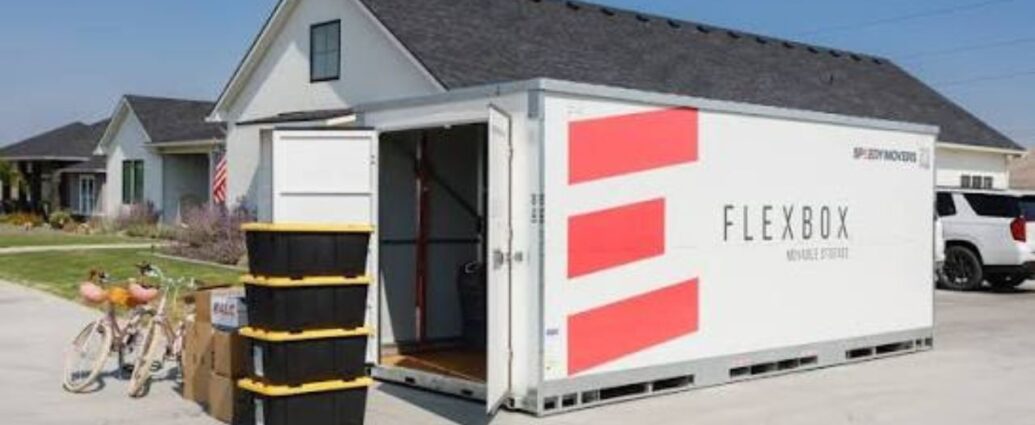
One example is Flex’s portable storage service, which delivers a storage trailer to a customer’s chosen address. Customers can load the trailer at home and either keep it at their property or have it transported to a secure storage lot.
This makes flexible storage particularly useful for people whose storage requirements may change during a move, renovation, relocation, or business expansion.
How Does Flex Storage Work?
The process depends on the provider and the type of storage selected.
With conventional self-storage, customers generally choose a location, select a suitable unit size, move their belongings into the unit, and access them according to the facility’s rules.
With portable storage, the process can be different. A provider may deliver a storage trailer to the customer’s home. The customer loads belongings into the trailer, and the trailer can then remain at the property or be transported to a secure storage facility.
Some providers also offer pickup and redelivery services, allowing customers to request their stored belongings when they need them.
Main Types of Flex Storage
Traditional Self-Storage
Self-storage units are one of the most familiar forms of flexible storage. Customers rent a dedicated space and can choose from different sizes according to their requirements.
Facilities may offer indoor units, drive-up units, climate-controlled spaces, and vehicle storage.
Flex Storage, for example, lists air-conditioned, drive-up, and interior storage options at its Georgia facilities, with vehicle storage available at selected locations.
Portable Storage
Portable storage is useful when convenience is a priority.
Instead of transporting everything to a storage facility, a storage trailer or container can be delivered to the customer’s property. This allows belongings to be loaded directly at home.
Flex’s portable storage service offers 10-foot and 14-foot trailers, with larger requirements accommodated through multiple trailers.
Business Storage
Businesses may use flexible storage for inventory, equipment, documents, supplies, or seasonal stock.
Flexible business storage can be especially useful when inventory levels change throughout the year. Instead of maintaining a large permanent warehouse, a company may use additional storage when demand increases.
Some modern flex-storage models combine storage with workspace, offices, loading facilities, and other business amenities.
Benefits of Flex Storage
1. Flexible Space
One of the biggest advantages is the ability to select storage based on current requirements.
If you only need to store several boxes, a small unit may be sufficient. If you are storing the contents of a home, you may require a much larger space.
Choosing an appropriately sized solution can help prevent paying for unused space.
2. Convenient Moving
Storage is particularly useful during relocation.
For example, if your new home is not ready when you leave your current property, your belongings can be placed in storage temporarily. Portable storage can simplify this process by bringing the storage space directly to your home.
3. Useful During Renovations
Renovation projects can create limited working space and expose furniture to dust and accidental damage.
Moving furniture and other belongings into storage can make it easier for contractors to work while keeping possessions organized.
4. Decluttering
Storage can help homeowners create more space without immediately selling or discarding possessions.
Seasonal decorations, sporting equipment, furniture, documents, and other infrequently used items can be moved into storage.
5. Business Scalability
Businesses often experience changing inventory requirements.
Flexible storage can provide additional capacity during busy periods, product launches, seasonal demand, or temporary projects.
Recent industry analysis has also highlighted flex space as an expanding opportunity for self-storage operators because it can broaden customer demand and create additional revenue possibilities.
Climate-Controlled Flex Storage
Some belongings are sensitive to temperature and humidity.
Climate-controlled storage can be useful for items such as:
- Wooden furniture
- Electronics
- Important documents
- Photographs
- Artwork
- Musical instruments
- Collectibles
- Clothing and fabrics
Flex Storage facilities advertise air-conditioned or climate-controlled options at many locations. Its Wetumpka facilities, for example, provide both drive-up and climate-controlled storage options.
When choosing climate-controlled storage, customers should ask exactly how temperature and humidity are managed rather than assuming every indoor unit has the same environmental protection.
Security Features
Security is an important factor when storing valuable belongings.
Depending on the facility, features may include:
- Security cameras
- Gated access
- Individual locks
- Fencing
- Exterior lighting
- Controlled entry
- On-site monitoring
Flex Storage lists video security, fenced facilities, exterior lighting, and secure access among the features available at certain locations.
Portable storage providers may use additional technologies. Flex’s portable trailers, for instance, are described as having temperature and humidity monitoring, GPS tracking, and sensor-based monitoring.
Customers should still review insurance requirements and understand what protection applies to their belongings.
Choosing the Right Storage Size
Selecting the right size can help control costs and make organization easier.
Start by making an inventory of everything that needs to be stored. Measure large furniture and estimate how many boxes you have.
A small unit may work for seasonal belongings and a few boxes. A medium unit can accommodate larger household contents, while larger spaces may be appropriate for furniture, business inventory, or the contents of an entire home.
Portable storage providers may also use trailer sizes rather than traditional square-foot storage units. Flex, for example, describes a 10-foot trailer as suitable for small apartments, seasonal items, tools, and hobby equipment, while a 14-foot trailer is designed for larger household and renovation requirements.
Flex Storage for Moving
Moving is one of the most practical applications of flexible storage.
A homeowner might use storage when:
- Moving dates do not overlap
- A new home is delayed
- Renovations are taking place
- A property needs to be staged
- A household is downsizing
- Moving to another city
- Temporary housing is required
Portable storage can reduce the number of times belongings have to be unloaded and reloaded.
Instead of moving possessions from one home to a temporary location and then to another home, a storage trailer can sometimes serve as the intermediate storage space.
Flex Storage for Home Renovations
Renovation projects often require furniture and personal belongings to be moved away from construction areas.
A portable storage unit can be delivered to the property, allowing homeowners to load furniture and other possessions as rooms are renovated.
This approach can be useful for kitchen remodels, flooring projects, painting, extensions, and larger home renovations.
For long-term projects, the storage unit can potentially be moved to a secure storage lot, depending on the provider’s service model.
Flex Storage for Businesses
Businesses can use flexible storage for much more than excess inventory.
Common applications include:
E-Commerce Inventory
Online sellers may need additional space during busy seasons. Flexible storage can provide room for products without requiring a permanent warehouse expansion.
Office Relocation
Companies moving offices can temporarily store desks, chairs, equipment, documents, and supplies.
Seasonal Inventory
Retailers can store products that are only needed during particular seasons.
Equipment Storage
Contractors, event companies, and other businesses may need temporary storage for tools and equipment.
Inventory Expansion
A growing business may need additional storage before it is ready to move into a larger commercial property.
How to Prepare Items for Flex Storage
Proper preparation helps protect belongings and makes future access easier.
Clean Everything
Remove dirt, dust, food residue, and moisture before storage.
Use Strong Packing Materials
Use sturdy boxes and appropriate protective materials for fragile belongings.
Label Boxes
Clearly label each box with its contents. If possible, include the destination room or category.
Protect Furniture
Use moving blankets or suitable furniture covers to help reduce scratches and surface damage.
Avoid Trapping Moisture
Items should be dry before being packed. For sensitive belongings, consider whether climate-controlled storage is appropriate.
Create an Inventory
A written or digital inventory can help you remember exactly what is stored and where it is located.
How to Organize a Storage Unit
Good organization can save considerable time.
Place items that you will need frequently near the front. Put long-term storage items farther toward the back.
Heavy boxes should generally be placed underneath lighter boxes. Avoid unstable stacks and leave reasonable access space when possible.
A simple storage map can also help. For example:
- Front: Frequently used items
- Left side: Seasonal belongings
- Center: Household boxes
- Right side: Furniture
- Back: Long-term storage
This arrangement makes future retrieval easier.
Flex Storage vs. Traditional Storage
Both options can be useful, but they provide different experiences.
| Feature | Traditional Self-Storage | Flexible/Portable Storage |
|---|---|---|
| Storage location | Facility | Home or facility, depending on provider |
| Transportation | Usually customer-arranged | May include delivery and pickup |
| Access | Facility-based | May allow at-home access |
| Unit options | Multiple sizes | Often multiple trailer/container sizes |
| Best for | Regular facility access | Moving, renovation, and convenience |
| Business use | Yes | Yes |
The right choice depends on how often you need access, how far you are from a facility, how much you need to store, and whether you want transportation assistance.
What to Consider Before Renting
Before choosing a flex storage solution, compare several factors.
Price
Look at the complete cost rather than just the advertised monthly rate. Delivery, pickup, insurance, administration, and other services may affect the final price.
Contract Terms
Understand the minimum rental period, cancellation rules, payment requirements, and notice periods.
Access
If you need frequent access, confirm the facility’s access hours or determine whether an at-home storage option is available.
Security
Ask about cameras, gates, locks, lighting, monitoring, and other security measures.
Storage Conditions
For sensitive possessions, determine whether the storage space is climate-controlled or otherwise protected against environmental conditions.
Insurance
Ask whether your existing homeowners or renters insurance covers stored belongings and whether the provider requires separate storage insurance.
Is Flex Storage Worth It?
Flex storage can be worthwhile when convenience and adaptability are more important than simply finding the cheapest available space.
For a homeowner renovating a property, a portable storage solution can eliminate repeated trips to a distant storage facility. For someone moving between homes, it can provide a useful temporary solution.
Businesses can also benefit by adding storage capacity without immediately committing to a larger permanent facility.
The best option depends on the amount of space required, storage duration, access needs, location, and total cost.
Final Thoughts
Flex storage offers a convenient approach to managing belongings when traditional storage arrangements do not perfectly match your needs. From self-storage units and climate-controlled spaces to portable trailers and business storage, there are several ways to create additional room.
The most suitable option depends on your circumstances. Before choosing a provider, compare storage sizes, pricing, access, security, environmental protection, insurance, and contract terms.
For moves and renovations, portable storage can provide additional convenience by bringing storage directly to your property. For long-term household or business needs, a traditional storage facility may offer the accessibility and unit variety you need.
With careful planning and organization, flex storage can make moving, decluttering, renovating, and managing inventory considerably easier.