
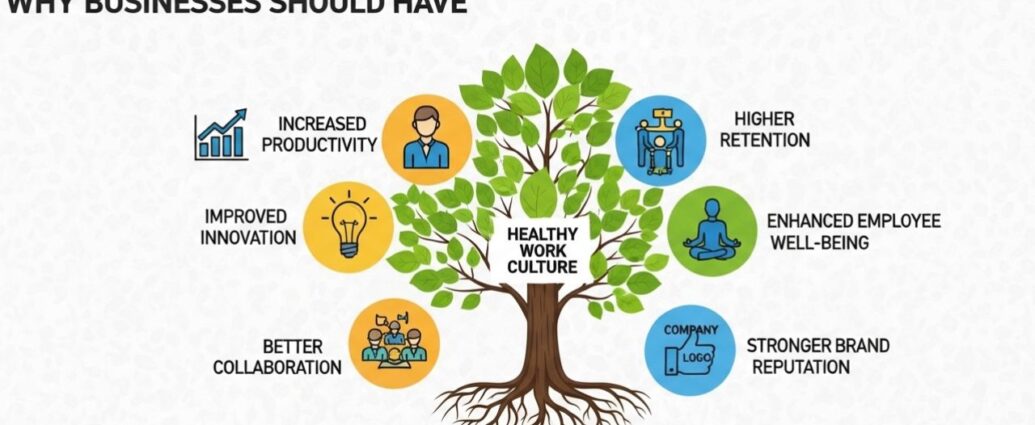
A healthy work culture is more than perks, casual Fridays, or free coffee—it is the foundation of a productive, engaged, and sustainable workplace. Companies that foster a positive work environment see benefits across employee well-being, performance, and long-term business growth.
This article explores why businesses should prioritize a healthy work culture, its key components, and actionable strategies to implement it effectively.
What Is a Healthy Work Culture?
A healthy work culture is an environment where employees feel respected, valued, and motivated. It goes beyond salaries and benefits, focusing on aspects such as:
-
Open communication and transparency
-
Recognition and appreciation for contributions
-
Work-life balance and flexibility
-
Opportunities for growth and learning
-
Supportive leadership and collaboration
Businesses that invest in these elements create workplaces where employees thrive.
Keywords: healthy work culture, positive workplace culture, workplace well-being
Why Businesses Should Prioritize a Healthy Work Culture
1. Boosts Employee Productivity
Employees who feel supported and valued are naturally more engaged. A positive work culture encourages focus, creativity, and commitment, leading to higher efficiency and output.
2. Reduces Employee Turnover
High turnover is costly. Companies with toxic environments struggle to retain talent, while businesses that nurture a healthy culture enjoy loyal, long-term employees.
3. Enhances Employee Well-Being
A supportive culture reduces stress, burnout, and workplace conflicts. Employees are more likely to feel satisfied and motivated, resulting in better mental and physical health.
4. Attracts Top Talent
Job seekers increasingly consider culture over compensation. Companies known for positive environments attract skilled professionals eager to contribute to their vision.
5. Drives Innovation and Collaboration
In an open, respectful environment, employees feel safe to share ideas, take risks, and collaborate, fostering innovation and creative problem-solving.
Keywords: benefits of healthy work culture, positive work environment
Key Components of a Healthy Work Culture
-
Open Communication – Encouraging employees to share ideas, feedback, and concerns freely.
-
Recognition & Rewards – Appreciating achievements fosters motivation and loyalty.
-
Work-Life Balance – Flexible schedules and understanding personal needs improve productivity and morale.
-
Inclusive Environment – Promoting diversity and ensuring every employee feels valued.
-
Continuous Learning – Providing opportunities for training, mentorship, and growth.
-
Supportive Leadership – Leaders who lead by example, listen, and mentor inspire trust and commitment.
Keywords: components of healthy work culture, workplace inclusion
Strategies to Build a Healthy Work Culture
-
Conduct regular employee feedback surveys to understand needs.
-
Celebrate successes, both big and small, publicly.
-
Provide flexible working hours and remote work options when possible.
-
Promote team-building activities to strengthen collaboration.
-
Invest in employee development programs and mentorship.
-
Maintain transparency in company policies, goals, and changes.
Keywords: how to build a positive work culture, workplace culture strategies
Examples of Companies With Healthy Work Cultures
-
Google – Encourages creativity, collaboration, and innovation with flexible spaces and employee programs.
-
Salesforce – Focuses on employee well-being, community involvement, and personal growth.
-
Patagonia – Prioritizes work-life balance and social responsibility, aligning company values with employee satisfaction.
Keywords: companies with positive workplace culture, healthy corporate culture examples
Final Thoughts
A healthy work culture is a strategic investment for any business. Beyond productivity and profitability, it impacts employee happiness, retention, innovation, and the company’s reputation.
Businesses that prioritize well-being, inclusivity, transparency, and growth opportunities foster a motivated workforce capable of driving long-term success. Creating a positive culture is not just a “nice-to-have”—it’s a necessity in today’s competitive and employee-driven market.