
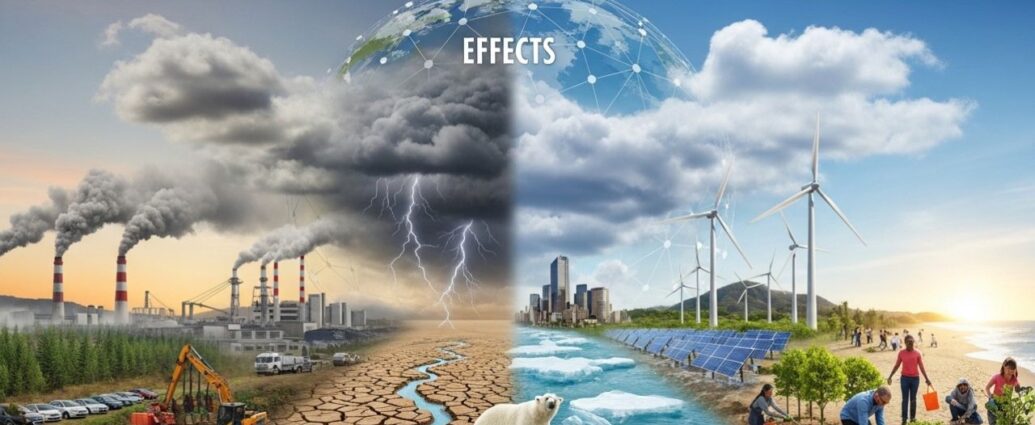
Climate change refers to long-term changes in Earth’s temperature, weather patterns, and climate systems. While the planet’s climate has changed naturally over millions of years, the current phase of climate change is happening much faster due to human activities. The main driver is the increase of greenhouse gases in the atmosphere, which trap heat and warm the planet.
Today, climate change is considered one of the biggest global challenges, affecting ecosystems, economies, and human societies around the world.
What Is Climate Change?
Climate change describes significant shifts in global or regional climate patterns, particularly the increase in Earth’s average temperature, often called global warming.
These changes can include:
-
Rising global temperatures
-
Changing rainfall patterns
-
More frequent extreme weather events
-
Melting glaciers and polar ice
-
Rising sea levels
Scientists study climate change by analyzing temperature records, ice cores, satellite data, and ocean measurements.
Causes of Climate Change
Climate change can occur due to natural processes, but the current rapid warming is mainly caused by human activities.
1. Burning Fossil Fuels
The burning of coal, oil, and natural gas for electricity, transportation, and industry releases large amounts of carbon dioxide (CO₂) into the atmosphere.
2. Deforestation
Forests absorb carbon dioxide, but large-scale deforestation reduces the planet’s ability to remove CO₂ from the air.
3. Industrial Activities
Factories and industrial processes release greenhouse gases such as methane and nitrous oxide, which contribute to warming.
4. Agriculture and Livestock
Farming practices and livestock production release methane and other gases that affect the climate.
Effects of Climate Change
Climate has already begun affecting the planet in many ways.
Rising Temperatures
Global temperatures have increased significantly over the past century, making recent decades the warmest on record.
Melting Ice and Rising Seas
Glaciers and polar ice caps are melting, which contributes to rising sea levels that threaten coastal communities.
Extreme Weather
Climate change is linked to more frequent and intense:
-
Heatwaves
-
Hurricanes
-
Floods
-
Droughts
-
Wildfires
Ecosystem Disruption
Many plants and animals struggle to adapt to changing climates, leading to habitat loss and biodiversity decline.
Impact on Human Life
Climate affects people around the world in several ways.
Major impacts include:
-
Food and water shortages
-
Damage to homes and infrastructure
-
Health risks from heatwaves and pollution
-
Economic losses from natural disasters
-
Displacement of communities due to rising seas
Developing countries are often most vulnerable, even though they contribute less to global emissions.
Global Efforts to Address Climate Change
Countries and organizations worldwide are working together to slow climate .
Renewable Energy
Switching from fossil fuels to solar, wind, and hydroelectric power can reduce greenhouse gas emissions.
Energy Efficiency for Climate Change
Improving energy efficiency in buildings, transportation, and industries helps lower emissions.
Reforestation for Climate Change
Planting trees and protecting forests helps absorb carbon dioxide from the atmosphere.
International Agreements
Global agreements aim to limit temperature rise and encourage countries to reduce emissions.
What Individuals Can Do
Individuals also play an important role in addressing climate .
Simple actions include:
-
Using public transportation or bicycles
-
Reducing energy consumption at home
-
Recycling and reducing waste
-
Supporting sustainable products
-
Conserving water and electricity
Small changes by millions of people can collectively make a significant impact.
The Future of Climate Action
Scientists emphasize that immediate action is critical to limit the worst impacts of climate . Innovations in clean technology, sustainable agriculture, and environmental policies offer hope for a more sustainable future.
By working together—governments, businesses, and individuals—the world can reduce emissions and protect the planet for future generations.
Conclusion on Climate Change
Climate is one of the most urgent environmental challenges facing humanity today. Driven largely by human activities, it affects ecosystems, weather patterns, and global communities. Understanding the causes and consequences of climate is essential for developing solutions that promote sustainability and environmental protection. With collective global efforts, it is still possible to slow climate and build a healthier planet for the future.