
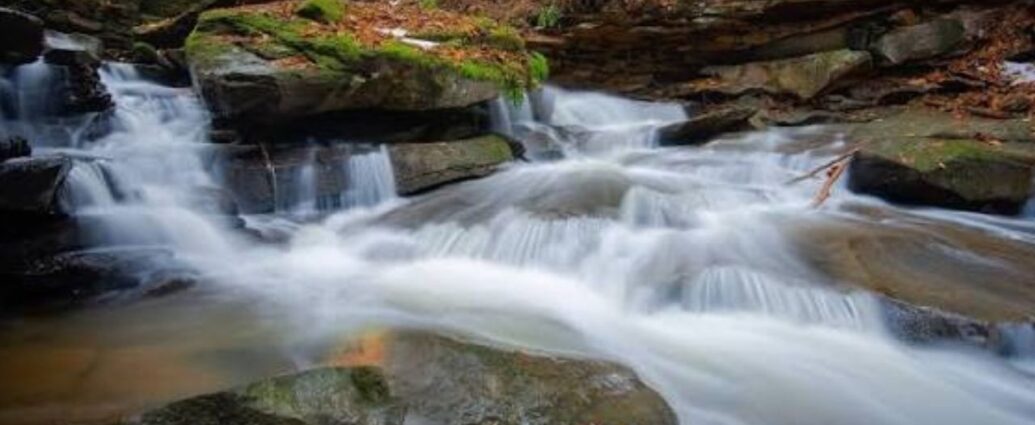
The waterfall is located in the Carpenter’s Park area, a historic site associated with an old trolley line that once connected communities in the Johnstown and Windber region. Today, visitors can explore the remnants of that history while making their way toward the falls.
Where Is Yoder Falls?
Yoder Falls is located in Somerset County, Pennsylvania, near Johnstown and Conemaugh Township. Although the property is owned by the City of Johnstown, the waterfall itself is situated in Somerset County. The falls are close to the Stonycreek River and can be reached from the Carpenter’s Park area.
The waterfall is not located inside a conventional state park with developed facilities. This is one reason Yoder Falls feels more secluded than many other waterfalls in Pennsylvania. Visitors should expect a natural, undeveloped environment rather than a maintained tourist attraction.
The area is also close to Route 219 and the large McNally Bridge. The bridge provides a striking contrast to the surrounding woods and gives visitors an interesting view during the descent toward the river.
How Tall Is Yoder Falls?
The exact reported height of Yoder Falls varies between sources. Historical descriptions have referred to a waterfall of approximately 15 feet, while modern observations have described the main waterfall as roughly 20 to 35 feet tall. The World Waterfall Database currently lists a cumulative drop of about 30 feet, with the lower tier accounting for approximately 25 to 27 feet.
These differences may result from how the waterfall’s individual tiers are measured. Regardless of the exact measurement, Yoder Falls is visually impressive because of its rocky setting and secluded location.
Water flows over a series of rocky steps before dropping into the area below, creating a scenic scene that becomes especially attractive when water levels are higher.
The History Behind Yoder Falls
One of the most interesting aspects of Yoder Falls is its connection to the area’s transportation and recreational history.
Carpenter’s Park was once a popular recreational destination. A trolley line operated through the region, allowing residents to travel from Johnstown and nearby communities to the park. Visitors could picnic, swim, socialize, enjoy a dance hall, and hike toward Yoder Falls.
The trolley route was eventually abandoned after the devastating 1936 flood. Over time, the former recreational area became much quieter, while nature gradually reclaimed parts of the landscape.
Evidence of the old transportation system can still be found near the bottom of the trail. Visitors can see cut-stone bridge abutments that once supported part of the trolley infrastructure. These historic remains add another layer of interest to the waterfall hike.
Hiking to Yoder Falls
Getting to Yoder Falls is not a typical easy waterfall walk. The route begins with a short but steep descent from the parking area toward the Stonycreek River.
The established portion of the route is relatively short, but the terrain can be steep and covered with loose rocks. Once hikers reach the bottom, they must follow the small watercourse upstream to reach the waterfall. There is no established hiking trail through this section, making the journey more challenging.
The upstream portion may require visitors to:
- Walk across rocks in the creek.
- Climb around large boulders.
- Navigate uneven terrain.
- Cross shallow sections of water.
- Carefully move around small drops and obstacles.
The Stonycreek area’s local tourism information estimates that reaching the waterfall from the bottom of the trail can take around 10 to 20 minutes, although the time depends on conditions and hiking ability.
What the Trail Is Like
The first section of the hike is primarily a descent through wooded terrain. Depending on the season, vegetation can affect visibility and make the trail less obvious.
As hikers descend, they may hear the sound of Yoder Falls before they can clearly see it. The lower portion also provides views toward McNally Bridge, which is nearly 1,400 feet long and approximately 192 feet high.
At the bottom, the remains of the historic trolley bridge provide a memorable landmark. From there, the route becomes much more rugged.
The creek itself becomes part of the hiking route. Because there is no established path to the waterfall, hikers need to choose their route carefully around rocks, logs, and shallow water.
Why Yoder Falls Is Worth Visiting
Yoder Falls appeals particularly to people who enjoy discovering lesser-known natural attractions.
Unlike heavily visited waterfalls, Yoder Falls does not have extensive visitor infrastructure. There are no large viewing decks, gift shops, or heavily developed walking paths. Instead, visitors get a more adventurous experience surrounded by woodland and rocky terrain.
The combination of natural scenery and local history makes the destination especially interesting. A visit is not simply about seeing a waterfall. It also provides an opportunity to explore the remains of a former recreational area and transportation route.
The waterfall’s secluded setting can make the final view feel like a reward after the challenging approach.
Best Time to Visit Yoder Falls
The best time to visit a waterfall generally depends on water levels, weather, and trail conditions. Yoder Falls can be particularly interesting after periods of rainfall because additional water can make the falls more impressive.
However, wet conditions also make the rocks and creek considerably more slippery. Since reaching the falls already involves uneven terrain and stream travel, visitors should carefully consider conditions before starting the hike.
Spring can offer pleasant scenery and stronger water flow, while autumn brings colorful foliage to the surrounding woodland. Winter visits can create an entirely different landscape, but ice and snow can make the route significantly more hazardous.
Safety Tips for Visiting Yoder Falls
Safety is particularly important at Yoder Falls because the route is not a conventional maintained hiking trail.
The local Stonycreek information site specifically warns that the route can be steep, contain loose rocks, and become difficult in the watercourse. Visitors are advised to wear appropriate footwear, be in good physical condition, and proceed carefully.
Before visiting, consider these precautions:
Wear Proper Footwear
Choose hiking shoes or boots with good traction. Regular sneakers may not provide enough grip on wet rocks.
Watch the Weather
Rain can rapidly change creek conditions and make rocks slippery. Check the forecast before heading out.
Avoid Hiking Alone
The remote and rugged nature of the route makes traveling with another person a sensible precaution.
Take Your Time
There is no need to rush through the creek section. Carefully evaluate each step before moving forward.
Be Careful Near Water
Wet rocks can be extremely slippery, even when the water appears shallow.
Respect the Environment
Pack out everything you bring with you and avoid damaging plants, historic structures, or natural features.
Yoder Falls and McNally Bridge
One of the distinctive features of the Yoder Falls experience is the presence of McNally Bridge nearby.
The massive bridge rises above the Stonycreek River and can be seen from portions of the descent. According to local information, it is nearly 1,400 feet long and 192 feet high.
The combination of the huge modern transportation structure, historic trolley remains, river gorge, and secluded waterfall creates an unusual landscape. Visitors can experience several layers of the region’s history and geography within a relatively small area.
Yoder Falls for Photographers
Yoder Falls can be an appealing location for nature and landscape photography.
The waterfall is surrounded by rocks, trees, and a narrow wooded environment that can create dramatic compositions. Photographers may also find interesting subjects in the historic bridge remains and the views toward McNally Bridge.
Because the route involves water and uneven rocks, photographers should prioritize stability and safety rather than attempting difficult positions for a photograph.
The waterfall can look different depending on rainfall, season, foliage, and sunlight. For this reason, returning at another time of year can provide a completely different photographic experience.
What to Bring
A successful visit does not require a large amount of equipment, but preparation is important.
Consider bringing:
- Sturdy hiking footwear
- Water
- Weather-appropriate clothing
- A small first-aid kit
- A fully charged phone
- Waterproof protection for electronics
- Snacks for longer visits
- A small backpack
Because the route includes a creek, waterproof or water-resistant gear can be particularly useful.
Is Yoder Falls Easy to Reach?
Yoder Falls is relatively close to major roads, but that does not mean it is an easy waterfall to reach.
The initial trail is short, yet the steep descent and rocky stream section make the overall experience more challenging than a simple roadside waterfall. Local sources describe the final approach as difficult because hikers must travel upstream over rocks and through the watercourse.
For experienced hikers, the adventure can be rewarding. For visitors who prefer paved paths, stairs, railings, and developed viewing areas, another Pennsylvania waterfall may be a better choice.
Yoder Falls and Pennsylvania’s Hidden Waterfalls
Pennsylvania is known for its numerous waterfalls, many of which are hidden in forests, ravines, and rural landscapes. Yoder Falls is a good example of this less-developed waterfall tradition.
Its appeal comes partly from the effort required to reach it. Rather than simply stepping out of a car and looking over a railing, visitors must descend into the gorge and follow the creek toward the waterfall.
This sense of exploration has helped make Yoder Falls a memorable destination for waterfall enthusiasts and adventurous hikers. It has also been included among notable waterfall hikes in Pennsylvania.
Final Thoughts
Yoder Falls is a hidden gem for travelers who enjoy waterfalls, local history, and off-the-beaten-path adventures. Located near Johnstown in Pennsylvania, the waterfall combines natural beauty with remnants of the area’s former trolley and recreational history.
The journey is short compared with many backcountry hikes, but the terrain should not be underestimated. A steep hillside, loose rocks, and an unmaintained creek route make proper footwear, careful planning, and good judgment essential.
For those prepared for the conditions, the reward is a peaceful waterfall tucked into a wooded gorge. The historic bridge remains and views of McNally Bridge make the trip even more distinctive.
If you are exploring Pennsylvania’s waterfalls and want something more adventurous than a developed tourist attraction, Yoder Falls is a destination worth considering. Just remember that the challenge is part of the experience, and safety should always come first.