
The word gorgeous is a powerful adjective used to describe something that is extremely beautiful, attractive, impressive, or pleasant. It is commonly used in everyday conversations, social media posts, fashion descriptions, travel writing, and creative content. Unlike the more neutral word “beautiful,” gorgeous often adds a stronger sense of admiration or enthusiasm.
For example, someone might say, “You look gorgeous today,” to give a warm and enthusiastic compliment. Similarly, a person might describe a sunset, dress, landscape, room, or piece of artwork as gorgeous. Cambridge Dictionary defines gorgeous as meaning “very beautiful or pleasant,” and lists it as an adjective.
What Does Gorgeous Mean?
Gorgeous means extremely attractive, beautiful, impressive, or pleasing to look at. It is generally stronger and more expressive than simply saying “pretty” or “nice.”
For example:
- She wore a gorgeous dress.
- The garden has gorgeous flowers.
- We watched a gorgeous sunset.
- Your new hairstyle looks gorgeous.
- The hotel has a gorgeous view of the mountains.
The word can describe people as well as objects, places, colors, scenery, clothing, artwork, and even experiences. Cambridge provides examples involving dresses, rooms, weather, views, and people.
Gorgeous as an Adjective
“Gorgeous” is an adjective, which means it describes or modifies a noun.
Consider these examples:
- a gorgeous woman
- a gorgeous man
- a gorgeous dress
- a gorgeous house
- a gorgeous landscape
- a gorgeous painting
- a gorgeous sunset
- a gorgeous color
In each example, “gorgeous” tells the reader that the person or thing is exceptionally attractive or pleasing.
Pronunciation of Gorgeous
The word gorgeous is pronounced approximately as:
GOR-jus
Its pronunciation is represented as /ˈɡɔːr.dʒəs/ in American English and /ˈɡɔː.dʒəs/ in British English.
The word has two syllables:
gor + geous
Although its spelling may look complicated, its pronunciation is relatively simple once you hear it correctly.
Gorgeous Meaning in Simple English
In simple English, gorgeous means:
Very beautiful or very attractive.
It can also mean something is extremely pleasant or impressive.
For example:
The beach is gorgeous.
This means the beach is exceptionally beautiful or enjoyable to look at.
Another example:
That dress is gorgeous.
This means the dress is extremely attractive.
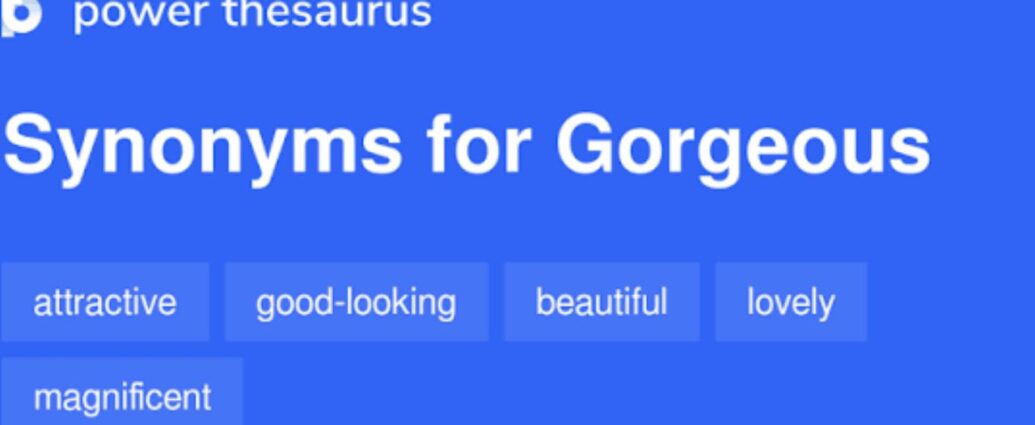
Gorgeous Synonyms
There are many synonyms for gorgeous. The best choice depends on the context and the strength of the compliment you want to express.
Common synonyms include:
- Beautiful
- Stunning
- Attractive
- Lovely
- Pretty
- Exquisite
- Magnificent
- Breathtaking
- Striking
- Elegant
- Ravishing
- Splendid
- Glorious
- Dazzling
- Captivating
- Alluring
- Impressive
Cambridge’s thesaurus includes words such as beautiful, attractive, good-looking, handsome, pretty, stunning, striking, breathtaking, lovely, and exquisite among related words for gorgeous.
Gorgeous vs. Beautiful
“Gorgeous” and “beautiful” are very similar, but they can have slightly different effects.
Beautiful is a general and widely applicable word. It can describe people, objects, scenery, music, ideas, and experiences.
Gorgeous is often more enthusiastic and expressive. It suggests a high level of beauty or attractiveness.
Compare:
She has a beautiful dress.
She has a gorgeous dress.
The second sentence sounds more enthusiastic and suggests that the speaker is particularly impressed by the dress.
Both words can also describe scenery:
We saw a beautiful mountain range.
We saw a gorgeous mountain range.
The second sentence gives the description a stronger emotional quality.
Gorgeous vs. Pretty
“Pretty” usually describes something attractive or pleasing, but it can sound softer or less intense than “gorgeous.”
For example:
She has a pretty dress.
This indicates that the dress is attractive.
She has a gorgeous dress.
This suggests that the dress is exceptionally beautiful or striking.
“Pretty” is also frequently associated with delicate or charming beauty, while “gorgeous” can describe something more dramatic or impressive.
Gorgeous vs. Stunning
“Stunning” is one of the strongest and most useful alternatives to gorgeous.
Both can describe someone or something that immediately attracts attention.
Examples:
- She looked gorgeous at the wedding.
- She looked stunning at the wedding.
- The view is gorgeous.
- The view is stunning.
“Stunning” can emphasize the effect that something has on the observer, while “gorgeous” focuses strongly on beauty or attractiveness.
How to Use Gorgeous in a Sentence
The word “gorgeous” usually comes before the noun it describes.
Before a noun
Examples:
- She bought a gorgeous dress.
- We stayed in a gorgeous hotel.
- They live in a gorgeous house.
- He gave her a gorgeous necklace.
- We visited a gorgeous garden.
After a linking verb
“Gorgeous” can also appear after verbs such as “look,” “seem,” or “be.”
Examples:
- You look gorgeous.
- The scenery is gorgeous.
- The flowers are gorgeous.
- The room looks gorgeous.
- Her new outfit looks gorgeous.
Cambridge specifically gives examples such as “The bride looked gorgeous” and “The weather was so gorgeous.”
Gorgeous for Describing People
One of the most common uses of gorgeous is to compliment someone’s appearance.
Examples include:
- You look gorgeous today.
- She looked gorgeous in her new dress.
- He looked gorgeous at the party.
- Your outfit is absolutely gorgeous.
- She has a gorgeous smile.
When describing a person, “gorgeous” usually means exceptionally attractive or beautiful.
However, context matters. In formal situations, alternatives such as “elegant,” “impressive,” or “well-presented” may be more appropriate.
Gorgeous for Describing Clothes
Fashion is another common context for this word.
Examples:
- That is a gorgeous dress.
- She wore a gorgeous black coat.
- These shoes are gorgeous.
- I love your gorgeous handbag.
- The designer created a gorgeous collection.
“Gorgeous” works particularly well in fashion writing because it conveys enthusiasm and admiration.
Gorgeous for Describing Nature
The word is not limited to people or fashion. It is frequently used for natural scenery.
Examples:
- The mountains look gorgeous in the morning.
- We saw a gorgeous sunset.
- The lake has gorgeous blue water.
- The valley offers gorgeous views.
- The flowers look gorgeous in spring.
The word is particularly effective when describing something visually impressive.
Gorgeous for Describing Colors
“Gorgeous” can also describe colors.
Examples:
- That is a gorgeous shade of blue.
- I love this gorgeous golden color.
- The wall has a gorgeous green tone.
- She chose a gorgeous red dress.
- The sunset created gorgeous shades of orange and pink.
Here, the word emphasizes the visual appeal of the color.
Gorgeous for Describing Places
Travel writers and everyday speakers often use gorgeous to describe attractive destinations.
Examples:
- We stayed in a gorgeous coastal town.
- The city has gorgeous architecture.
- The hotel overlooks a gorgeous beach.
- The countryside is absolutely gorgeous.
- They discovered a gorgeous mountain village.
It can make a description sound more enthusiastic and vivid.
Gorgeous in Everyday Conversation
“Gorgeous” is common in informal English.
For example:
Person A: How was your vacation?
Person B: Amazing! The beaches were gorgeous.
Or:
Person A: What do you think of my new dress?
Person B: It looks gorgeous!
Because the word expresses strong admiration, it is particularly useful when giving compliments.
Gorgeous in Social Media Captions
“Gorgeous” is also frequently used in social media captions and comments.
Examples:
- Feeling gorgeous today.
- What a gorgeous sunset!
- Gorgeous views everywhere.
- Absolutely gorgeous!
- A gorgeous day with amazing people.
- This place is simply gorgeous.
Its short and expressive nature makes it useful for captions, comments, and posts.
Gorgeous Examples in Different Contexts
For a person
She looked gorgeous at the wedding.
For clothing
That is a gorgeous evening dress.
For scenery
We woke up to a gorgeous mountain view.
For weather
It was a gorgeous summer morning.
For architecture
The city is famous for its gorgeous historic buildings.
For food presentation
The chef prepared a gorgeous dessert.
For artwork
The gallery displayed a gorgeous painting.
For colors
The artist used a gorgeous combination of blue and gold.
These examples show how flexible the word can be.
Formal and Informal Uses of Gorgeous
“Gorgeous” is generally more expressive and conversational than highly formal descriptive vocabulary.
In casual writing:
The beach was gorgeous.
In more formal writing, you might choose:
The beach was exceptionally beautiful.
Or:
The landscape was remarkably picturesque.
However, “gorgeous” is not limited to informal speech. It can appear in descriptive journalism, reviews, marketing, travel writing, and creative writing when an enthusiastic tone is appropriate.
Is Gorgeous a Positive Word?
Yes. Gorgeous is overwhelmingly positive when used to describe appearance, scenery, objects, or experiences.
Calling something gorgeous normally communicates admiration.
For example:
What a gorgeous painting!
This tells the listener that the speaker strongly appreciates the painting’s appearance.
Similarly:
You look gorgeous.
is normally intended as a strong compliment.
Common Phrases With Gorgeous
Several phrases commonly appear with the word.
Gorgeous view
The hotel has a gorgeous view of the ocean.
Gorgeous dress
She bought a gorgeous dress for the celebration.
Gorgeous smile
Her gorgeous smile made everyone feel welcome.
Gorgeous weather
We had gorgeous weather during our vacation.
Gorgeous sunset
We stopped to photograph the gorgeous sunset.
Gorgeous scenery
The road passes through gorgeous scenery.
Gorgeous color
This is a gorgeous shade of purple.
Gorgeous home
They renovated their gorgeous old house.
These combinations sound natural in everyday English.
Words Related to Gorgeous
Besides direct synonyms, several words are closely associated with the idea of gorgeousness.
These include:
- Beauty
- Attractive
- Elegant
- Charming
- Lovely
- Magnificent
- Spectacular
- Brilliant
- Dazzling
- Captivating
- Radiant
- Luxurious
- Exquisite
The exact word should be selected according to the thing being described.
For example, elegant is particularly useful for clothing, design, manners, or architecture, while breathtaking is especially effective for spectacular scenery.
Antonyms of Gorgeous
An antonym is a word with an opposite or contrasting meaning.
Possible antonyms of gorgeous include:
- Ugly
- Unattractive
- Plain
- Hideous
- Unsightly
- Drab
- Dull
- Unpleasant
- Ordinary
Cambridge’s thesaurus lists several contrasting terms, including ugly, hideous, unsightly, unattractive, plain, drab, dull, and dreary.
However, the best antonym depends on the context.
For example:
Gorgeous scenery ↔ drab scenery
while:
Gorgeous person ↔ unattractive person
Gorgeous Meaning in Different Contexts
The meaning of gorgeous remains connected to beauty, but its exact implication changes depending on the noun.
Gorgeous person
Means extremely attractive or beautiful.
Gorgeous dress
Means exceptionally attractive, stylish, or visually appealing.
Gorgeous scenery
Means exceptionally beautiful or impressive.
Gorgeous weather
Means very pleasant and enjoyable.
Gorgeous color
Means visually striking or especially attractive.
Gorgeous design
Means highly attractive, impressive, or aesthetically pleasing.
This flexibility makes “gorgeous” one of the more useful descriptive adjectives in English.
Tips for Using Gorgeous Effectively
Using descriptive words effectively requires considering context and audience.
1. Use it for strong praise
“Gorgeous” works best when you genuinely want to express strong admiration.
2. Avoid unnecessary repetition
If every object in a paragraph is called gorgeous, the word loses some of its impact. Mix it with words such as beautiful, elegant, stunning, striking, and magnificent.
3. Match the tone
“Gorgeous” is expressive and warm. In highly technical or formal writing, a more precise adjective may be better.
4. Consider the subject
Use a synonym that communicates the exact quality you mean. For example, “elegant” may be better than “gorgeous” when discussing a sophisticated design.
5. Use it naturally
Common constructions such as “gorgeous dress,” “gorgeous view,” and “you look gorgeous” sound natural and are easy for English learners to use.
Frequently Asked Questions About Gorgeous
What does gorgeous mean?
Gorgeous means very beautiful, attractive, or pleasant. It is used to express strong admiration for a person, object, place, or experience.
Is gorgeous stronger than beautiful?
Often, yes. “Gorgeous” usually sounds more enthusiastic or emphatic than the general word “beautiful,” although the strength depends on context.
What is a simple synonym for gorgeous?
Simple synonyms include beautiful, pretty, lovely, attractive, and stunning.
Can gorgeous describe a man?
Yes. “Gorgeous” can describe people of any gender when the speaker wants to emphasize attractiveness.
Can gorgeous describe things?
Yes. It can describe clothing, houses, scenery, colors, artwork, food, weather, architecture, and many other things.
Is gorgeous a compliment?
Yes. When used to describe someone’s appearance, “gorgeous” is normally a strong compliment.
What is the opposite of gorgeous?
Common opposites include ugly, unattractive, plain, hideous, and unsightly.
Final Thoughts
Gorgeous is a versatile adjective that expresses strong admiration for beauty, attractiveness, or pleasantness. It can describe people, clothing, scenery, architecture, colors, artwork, weather, and many other subjects.
The word is closely related to beautiful, stunning, attractive, lovely, exquisite, breathtaking, and magnificent, but each synonym carries a slightly different tone or emphasis.
Whether you are complimenting someone’s outfit, describing a breathtaking landscape, writing a travel article, or creating a social media caption, “gorgeous” can make your language more expressive. Learning how and when to use it will help you communicate admiration naturally and confidently in English.